How it works
How Does Neuro Recall Work? Each Ingredient's Job in Plain Words
Neuro Recall is meant to work through its 14 separate ingredients, not through a tested formula. B12 and folate cover B vitamins, bacopa and ginkgo are the studied memory herbs, and tea compounds, choline and plant extracts fill out a 635 mg blend. No trial of Neuro Recall has been published, and the blend hides how much of each herb you get.
Written by the Neuro Recall editorial teamUpdated
The short answer
How does Neuro Recall work?
Neuro Recall works like most multi-ingredient supplements: each ingredient has a small job, and the formula bets they add up. No published trial has tested the finished capsule.
Two capsules give you four vitamins and minerals with printed amounts, plus a 635 mg blend of ten plant extracts and nutrients with no single amounts. It is sold for memory and focus support.
So the fair way to judge it is one ingredient at a time, using research done on each one alone. The full Supplement Facts panel shows every label line in order.
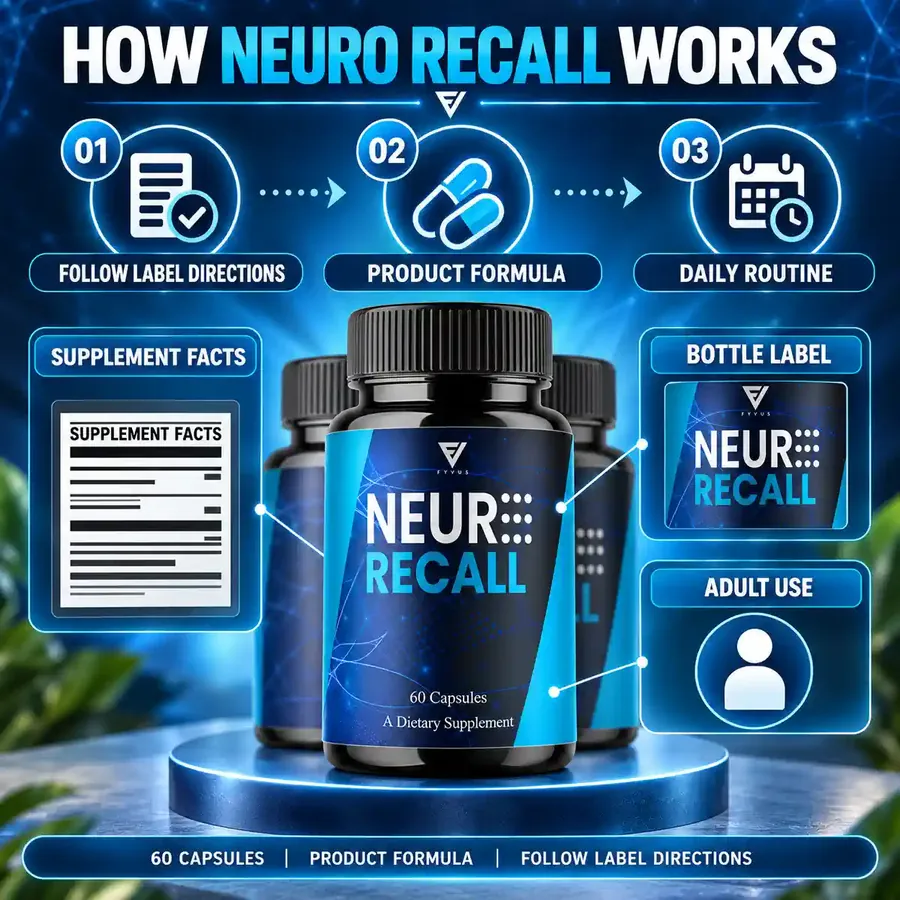
Ingredient roles
What is each Neuro Recall ingredient meant to do?
The 14 ingredients fall into six groups, each with a plain-words job.
B vitamins: folate and B12
The body uses vitamin B12 for nerves and blood cells; a shortage can cause confusion and poor memory (NIH ODS, Vitamin B12). Folic acid does not seem to help thinking (NIH ODS, Folate).
Minerals: magnesium and chromium
Magnesium is a basic mineral with no memory data in its source (NIH ODS, Magnesium). Chromium is sold for blood sugar; scientists do not think most people need extra (NIH ODS, Chromium).
Memory herbs: ginkgo and bacopa
The two most studied herbs here. Bacopa trials found small gains on some tests (ADDF, Bacopa). Ginkgo did not lower dementia risk in large studies (NCCIH, Ginkgo).
Tea compounds: green tea and L-theanine
Green tea extract adds catechins and some caffeine; its source does not discuss thinking (NCCIH, Green tea). L-theanine is tied to calm attention, but human data are thin (MSKCC, L-theanine).
Choline and antioxidant: alpha-GPC and lipoic acid
Alpha-GPC was studied in people with dementia, not healthy adults (ADDF, Alpha-GPC). Lipoic acid's memory trials were tiny and mostly uncontrolled (Linus Pauling Institute, Lipoic acid).
Plant and eye extracts
Cinnamon and berberine are studied for blood sugar, not memory (NCCIH, Cinnamon) (MSKCC, Berberine). Bilberry, lutein and zeaxanthin are eye ingredients (NEI, AREDS2).
Evidence meter
How strong is the evidence for each key ingredient?
Seven ingredients rated on their own, at research doses, from the linked sources.
The bars rate single ingredients, not the capsule. A higher bar for bacopa only carries over if the capsule holds a similar amount, and the label does not say.
The blend problem
Why does the shared 635 mg blend matter?
Ten ingredients share 635 mg, and the label gives no single amount. So no one outside the brand can say whether any herb reaches a studied dose.
A proprietary blend may show only its total weight, with ingredients listed from most to least by weight (FDA, Labeling guide). That order still gives a clue. Bacopa is fourth, behind cinnamon, ginkgo and bilberry, so it can be at most a quarter of 635 mg.
| Ingredient | Place in blend | Most it can be | Amount in research |
|---|---|---|---|
| Ginkgo biloba | 2nd of 10 | Under 318 mg | Not given in our source |
| Bacopa monnieri | 4th of 10 | Under 159 mg | Usually 300 mg a day (ADDF, Bacopa) |
| Green tea extract | 5th of 10 | Under 127 mg | No memory dose in source |
| L-theanine | 7th of 10 | Under 91 mg | No human dose in source |
| Alpha-GPC | 9th of 10 | Under 71 mg | 1,200 mg a day, in dementia (ADDF, Alpha-GPC) |
At best, bacopa lands near half the usual study amount, and alpha-GPC far below the dementia-trial dose. Real amounts are likely lower still.
Claims and rules
What can the Neuro Recall label claim, and what can it not?
A supplement label may describe support for normal body functions, but it may not claim to treat or prevent a disease. That is why the bottle carries the FDA statement and the panels say "support" and "aids."
The FDA does not approve supplements before they go on sale (FDA, Supplement Q&A). The FTC expects health claims to rest on reliable science, and customer stories cannot stand in for it (FTC, Health claims). In December 2024, a court ordered the maker of Prevagen, a memory supplement, to stop misleading claims (FTC, Prevagen statement).
What the label and panels can say
- "Supports" or "aids" wording about normal body functions
- Ingredient names, printed amounts and the blend total
- Marketing lines such as "energy support" and "mental clarity and focus"
What they cannot say
- Treating, preventing or reversing dementia or Alzheimer's disease
- Approval by the FDA, which does not approve supplements (FDA, Approval myths)
- No "clinically proven" wording without a trial of the formula
Ready to try Neuro Recall?2 capsules a day · 60 capsules per bottle · price shown at checkout
Order nowTry it fairly
How can you tell if Neuro Recall works for you?
Four steps shaped like the bacopa studies: steady use, a medicine check, one change at a time and a 12-week review.
- 01
Start at the label dose
Two capsules a day, every day. Steady use is how the ingredients were studied.
- 02
Clear it with a pharmacist
Ginkgo, berberine and chromium interact with common drugs, so a quick check comes first.
- 03
Hold everything else steady
Change one habit at a time, so your notes point to the capsules and not to something new.
- 04
Judge it at 12 weeks
Compare sleep, focus and forgetful moments with your first week, then decide.
Want the week-by-week version? Read the 3-month results timeline.
By the numbers
What can't Neuro Recall do?
It cannot treat memory loss, find a vitamin shortage, or replace sleep and exercise.
Next step
Is Neuro Recall worth trying?
It can be worth a fair trial if your doctor is fine with the ingredients and you like a simple 2-capsule routine. Keep your hopes modest, since the blend amounts are hidden.
Read the side effects and interactions first. A pack covering about three months matches the bacopa studies. The live checkout shows the price, shipping and guarantee window before you pay.
FAQ
How Neuro Recall works: common questions
How is Neuro Recall supposed to work?
Neuro Recall is supposed to work through its separate ingredients, each with a small job of its own. Bacopa and ginkgo are the memory herbs; the rest add B vitamins, minerals, tea compounds, choline and plant extracts. No published study has tested the finished formula, so any effect is a guess from ingredient research.
Do memory supplements actually work?
Most memory supplements have weak evidence in healthy adults. Bacopa shows small effects in small trials, while ginkgo and folic acid have not held off decline in larger studies. Habits such as 7 or more hours of sleep and 150 minutes of weekly activity have firmer support (CDC, Sleep) (CDC, Activity).
Is the bacopa in Neuro Recall at the studied dose?
The label does not say. Bacopa is fourth in a 635 mg blend listed from heaviest to lightest, so it can be at most about 158 mg per serving. Trials usually used about 300 mg a day (ADDF, Bacopa), so the capsule likely holds less than the studied amount.
What is the WMG-NVT Exclusive Blend?
It is the brand's name for the 635 mg proprietary blend in each 2-capsule serving. It holds ten ingredients, from cinnamon and ginkgo down to lutein and zeaxanthin. The label lists them by weight but prints no single amounts, which U.S. labeling rules allow (FDA, Labeling guide).
Where does the caffeine in Neuro Recall come from?
From the green tea extract, though the label gives no amount. Green tea naturally contains caffeine (NCCIH, Green tea), and it sits fifth in the blend, under about 127 mg of extract. If caffeine bothers you, take the capsules early and watch your sleep.
Is Neuro Recall a medicine?
No. Neuro Recall is a dietary supplement, not a drug, and the FDA does not check supplements before sale (FDA, Supplement Q&A). It is not meant to diagnose, treat, cure or prevent any disease. Keep taking your prescribed medicine.
Who wrote this
Written and reviewed by
Plain-language pages built from the label, the sales page and linked public health sources.
Last updated . Read our editorial standards and how we check reviews. This website is run by a U.S. merchant that sells Neuro Recall, not by the manufacturer (the label carries the FYVUS logo). We earn money when you buy through our order links.
Keep reading
More about Neuro Recall
Ingredients
All 14 Neuro Recall ingredients in label order, with printed amounts, research doses and the evidence for each.
Read more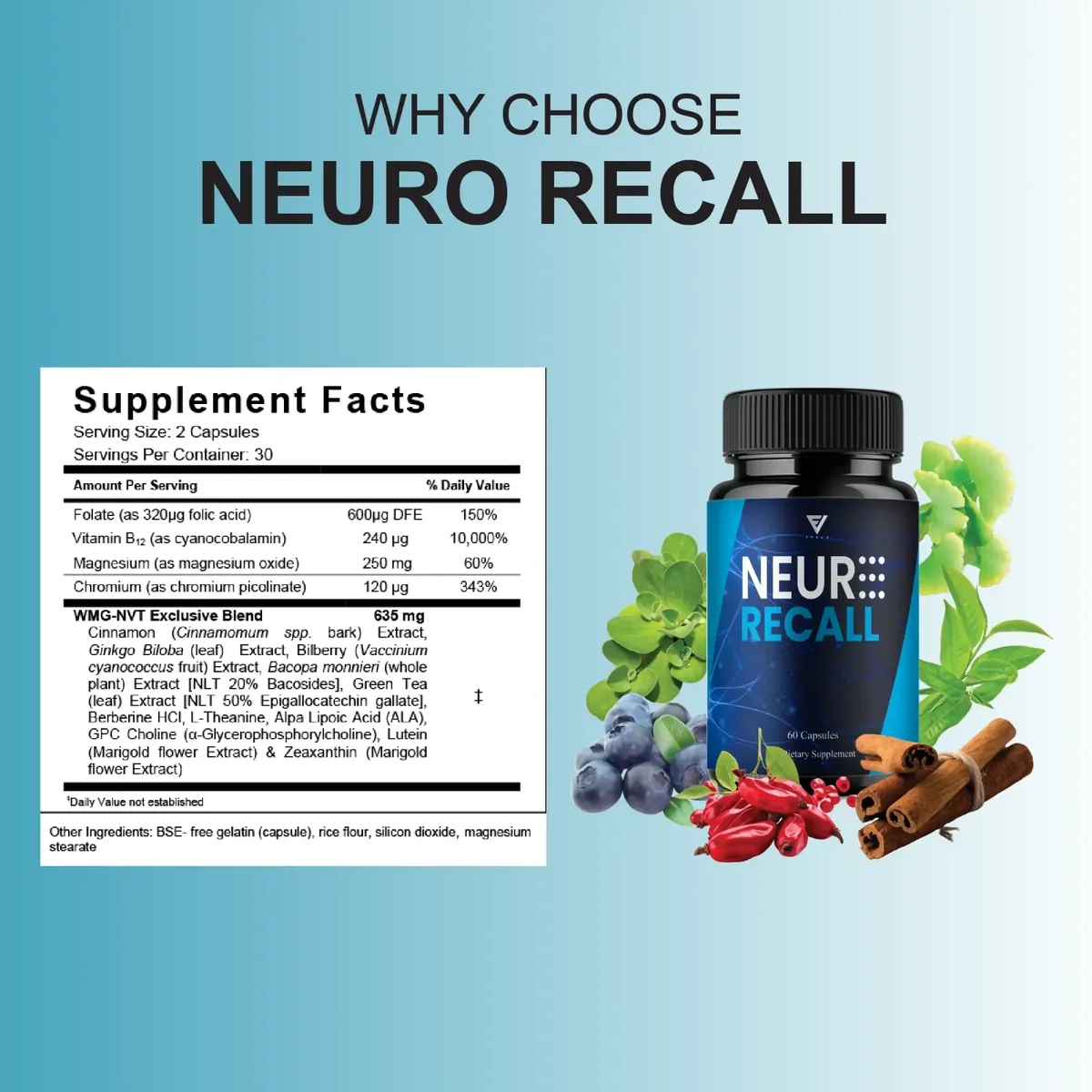
Supplement Facts
The Neuro Recall label decoded: serving size, %DV, the 635 mg blend, the folate and bilberry oddities and the back label.
Read more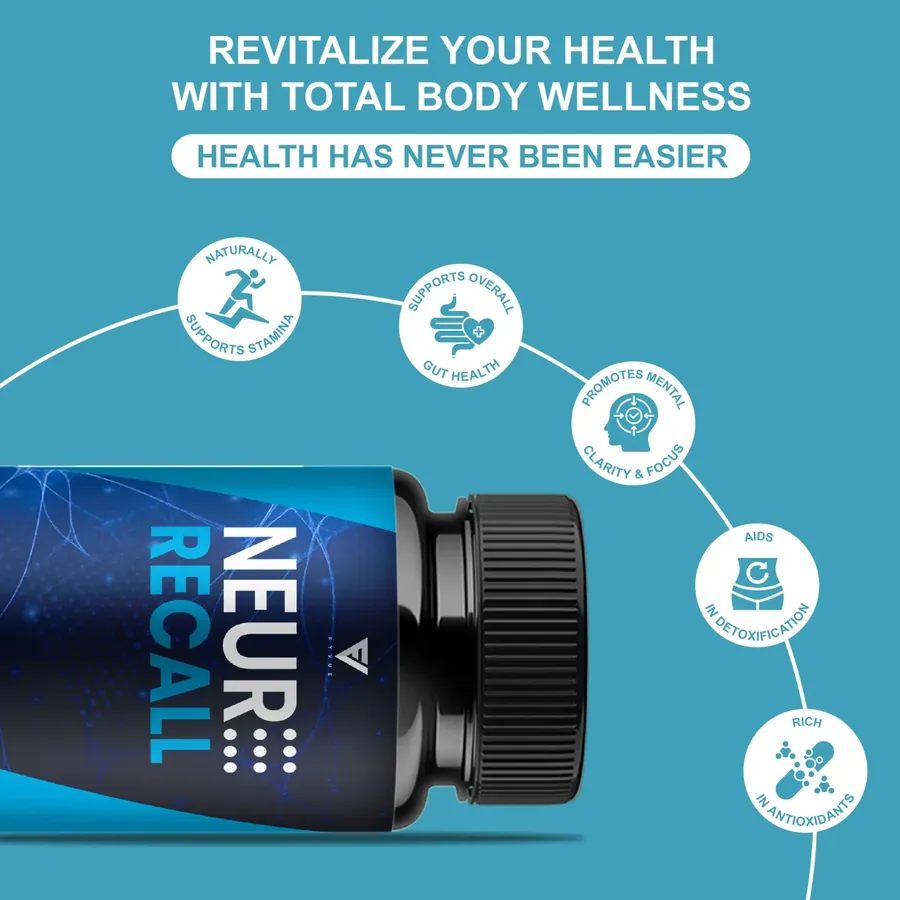
Results timeline
A week-by-week Neuro Recall plan: what to track for 3 months, what studies suggest, and when to stop.
Read moreU.S. authorized Neuro Recall merchant
Ready to try Neuro Recall?
Pick a pack. Each bottle is 30 days at 2 capsules a day. The order page shows the price, shipping and the guarantee terms before you pay.
- Secure checkout
- Money-back window: As printed on live checkout
- Ships from the U.S. with tracking